Tirzepatide
A dual GLP-1 and GIP receptor agonist that became FDA-approved for metabolic conditions — one of the most-studied metabolic peptides of the modern research era.
Hover to pause rotation
A dual GLP-1 and GIP receptor agonist that became FDA-approved for metabolic conditions — one of the most-studied metabolic peptides of the modern research era.
Tirzepatide is a synthetic peptide that activates two receptor systems simultaneously: GLP-1 (glucagon-like peptide-1) and GIP (glucose-dependent insulinotropic polypeptide). Both are incretin hormones — hormones released by the gut after eating that signal to the pancreas and brain. Developed by Eli Lilly, Tirzepatide received FDA approval under the brand names Mounjaro (2022) and Zepbound (2023), making it one of the most rigorously studied peptides in the metabolic research category.
What's notable from a research perspective is the GIP component. For decades, GIP was considered the "forgotten incretin" — researchers knew it existed and influenced insulin release, but drugs targeting it hadn't shown major effects. Tirzepatide's success changed that understanding completely, demonstrating that GIP receptor activation in combination with GLP-1 produces meaningfully different metabolic outcomes than GLP-1 alone.
📡 Weekly peptide research updates — regulatory updates, new compound profiles, COA alerts.
⚠️ FDA PCAC: -- days leftNo spam. Unsubscribe anytime. 7 peptides under review — see what's at stake →
Tirzepatide's clinical trajectory reshaped how the research community thinks about incretin pharmacology — particularly the long-overlooked GIP receptor.
7 free research tools built around exactly this kind of compound data. No paywall, no credit card.
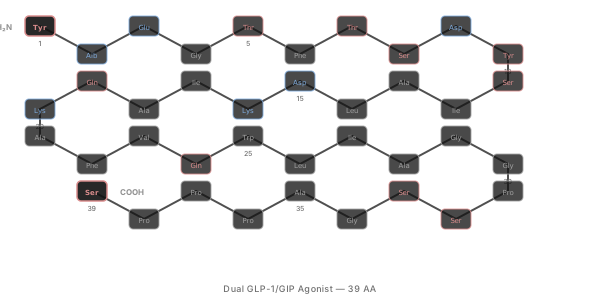
Tirzepatide is a single synthetic peptide chain that binds both GLP-1 receptors (stimulating insulin release, reducing glucagon, slowing gastric emptying, and producing satiety signals) and GIP receptors (enhancing insulin response and potentially modulating adipose tissue function). The single molecule carrying dual agonist activity was a significant medicinal chemistry achievement — engineering one peptide to bind two structurally different receptor families with appropriate affinity at each required substantial iterative design work.
Imagine your gut has two alarm systems that notify the brain when food arrives — GLP-1 is the loud siren, and GIP is the quieter backup buzzer. Historically, most research focused on just the siren. Tirzepatide is like an upgrade that activates both alarms at full volume at the same time. Turns out the combined signal is much more powerful than scientists expected.
Research Disclaimer: The following reflects published clinical and preclinical research and is not medical advice. Consult a licensed healthcare provider before making any health decisions.
Tirzepatide has one of the largest published phase III clinical data sets for any metabolic peptide. The SURMOUNT program (obesity) and SURPASS program (type 2 diabetes) together enrolled over 15,000 participants. Jastreboff et al. (2022, New England Journal of Medicine) published primary SURMOUNT-1 findings; Frías et al. (2021, NEJM) published SURPASS-2 head-to-head versus semaglutide — making tirzepatide among the most rigorously characterized dual-agonist peptides in the research literature.
Key References: Jastreboff AM et al. (2022). "Tirzepatide once weekly for the treatment of obesity." New England Journal of Medicine, 387(3), 205–216 (SURMOUNT-1). Frías JP et al. (2021). "Tirzepatide versus semaglutide once weekly in patients with type 2 diabetes." New England Journal of Medicine, 385(6), 503–515 (SURPASS-2). Aronne LJ et al. (2024). "Tirzepatide for the treatment of obesity: SURMOUNT-5." New England Journal of Medicine.
Tirzepatide (Mounjaro/Zepbound) is FDA-approved for both type 2 diabetes management and weight management — two different indications making it one of the few metabolic compounds to cross both regulatory thresholds.
GIP was first characterized in the 1970s but spent nearly 50 years in relative research obscurity. Tirzepatide's clinical results essentially rehabilitated GIP's scientific reputation and opened an entirely new research field around its receptor.
SURMOUNT trial data published in the New England Journal of Medicine reported weight outcomes that were, at the time of publication, unprecedented for any investigational agent studied in comparable clinical settings.
Every batch of Tirzepatide with full Certificate of Analysis documentation.