🔬
What is it?
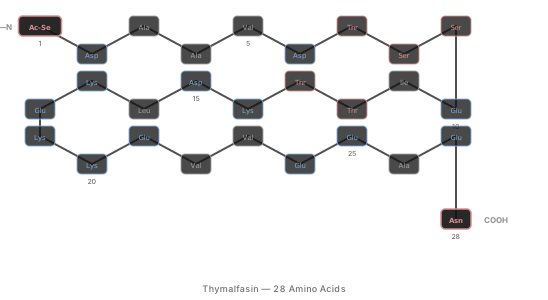
Thymosin Alpha-1 is a peptide naturally produced by the thymus gland — the organ tucked behind your sternum that trains your immune system's T-cells. It's a 28-amino-acid chain that your body makes on its own, but researchers have been studying a synthetic version since the 1970s. It's one of the most clinically studied peptides in the immune support category, with human research data going back decades.
The thymus gland works like a training academy for immune cells. Immature T-cells arrive from the bone marrow and go through an intensive selection and training process. Thymosin Alpha-1 is one of the key peptides the thymus produces to facilitate this — essentially one of the academy's main teaching tools.
What makes Thymosin Alpha-1 particularly significant is that pharmaceutical versions (marketed as Zadaxin by SciClone Pharmaceuticals) have received regulatory approval in multiple countries for specific clinical indications, giving it a clinical research track record that most peptides in this library never achieve.
⚡
Por qué interesa a los investigadores
Among immune-focused peptides, Thymosin Alpha-1 stands out for the depth of its clinical research history — studied not just in laboratory settings but in human clinical trials spanning multiple decades and continents.
- Studied in clinical contexts for immune reconstitution — rebuilding immune function after compromise from chemotherapy, viral infection, or immunodeficiency conditions
- One of the most-published peptides in immune research, with studies spanning cancer immunology, hepatitis B/C, HIV, and sepsis research contexts
- Approved as Zadaxin in over 35 countries, giving it a regulatory validation track record that makes it a trusted reference compound for immune pharmacology research
⚙️
How It Works
Thymosin Alpha-1 works by activating dendritic cells (the immune system's surveillance scouts) through Toll-like receptor interactions, triggering a cascade that amplifies their ability to present antigens to naive T-cells. It also stimulates T-helper cell maturation and shifts immune balance toward the Th1 profile — the branch of immunity responsible for fighting intracellular pathogens and cancer cells.
It influences natural killer (NK) cell activity and increases the production of cytokines like interferon-gamma and interleukin-2, which coordinate immune responses against viruses and abnormal cells.
Think of it like this 🧠
Your immune system is an army. Raw recruits come in — they can fight, but they don't know what to target. The thymus gland is the military academy that teaches them to identify and engage specific enemies. Thymosin Alpha-1 is like adding more experienced drill sergeants to that academy — more recruits get trained faster, come out sharper, and are better at recognizing real threats in the field.
📐
Contexto de Protocolo de Investigación
Investigación Renuncia de responsabilidad: Lo siguiente refleja investigación clínica y preclínica publicada y no es consejo médico. Consulta a un profesional de la salud licenciado antes de tomar decisiones de salud.
Thymosin Alpha-1 (Zadaxin/thymalfasin) is an approved drug in 35+ countries with a substantial published clinical trial record spanning hepatitis B/C, cancer immunotherapy, and COVID-19 research — providing extensive human dosing data.
Dosing Ranges from Published Investigación
Hepatitis B/C (Approved)
The standard Zadaxin protocol used 1.6 mg SC twice weekly for 6 months in hepatitis B and C trials. Cheng et al. (1997, Hepatology) and multiple Asian studies documented sustained viral response rates. This twice-weekly SC protocol is the best-characterized dosing regimen in the literature.
COVID-19 Studies
Multiple Chinese studies during 2020–2021 used 1.6 mg SC once or twice daily for 5–7 days in severe COVID-19 patients as adjunct therapy. Liu et al. (2020, J Infection) documented 28-day mortality as primary endpoint.
Cancer Adjunct
Lung cancer trials used 1.6 mg SC twice weekly alongside platinum-based chemotherapy for 3–6 cycles (Chen et al., 2013, Oncol Rep). CD4+ and CD8+ T-cell counts used as surrogate markers.
Routes, Duration & Timing
SCStandard route across all clinical applications. SC injections into the abdomen or thigh. Half-life approximately 2 hours; immunological effects persist longer than plasma half-life suggests.
TimelineImmunological parameter changes (T-cell counts) measurable at 4-week intervals in hepatitis trials. Maximum viral response assessed at end of 6-month course.
ReconstitutionZadaxin supplied as lyophilized 1.6 mg vial with water diluent. Stable at 2–8°C. Use immediately after reconstitution.
Referencias Clave: Cheng AL et al. (1997). Thymosin alpha-1 hepatitis B. Hepatology. · Liu Y et al. (2020). Thymosin alpha-1 in COVID-19. J Infection. · Chen H et al. (2013). Thymosin alpha-1 in NSCLC. Oncol Rep.
✨
Datos Interesantes
🏥
Thymosin Alpha-1 is an approved pharmaceutical (Zadaxin) in over 35 countries, used for treating chronic hepatitis B and C and as adjunct cancer immunotherapy — one of the few peptides with this level of regulatory validation worldwide.
🧬
It was first isolated in the 1960s-70s by Dr. Allan Goldstein at Georgetown University, who spent decades studying thymus secretions before the broader scientific community recognized their clinical potential.
📉
The thymus gland shrinks with age (thymic involution) — by age 65, most people have less than 15% of original thymic tissue remaining. This makes thymic peptides like Thymosin Alpha-1 particularly relevant to aging and immune resilience research.
📋
Documentación COA y de Lotes
Every batch of Thymosin Alpha-1 with full Certificate of Analysis documentation. Third-party HPLC verification, mass spectrometry confirmation, and sterility testing results are included with each batch.
📄
HPLC Certificate
Documentation pending batch assignment
🔬
Mass Spec Analysis
Documentation pending batch assignment
✅
Purity Report
Documentation pending batch assignment
🧪
Sterility Test
Documentation pending batch assignment
Learn about our COA verification process →